
Teeth Whitening
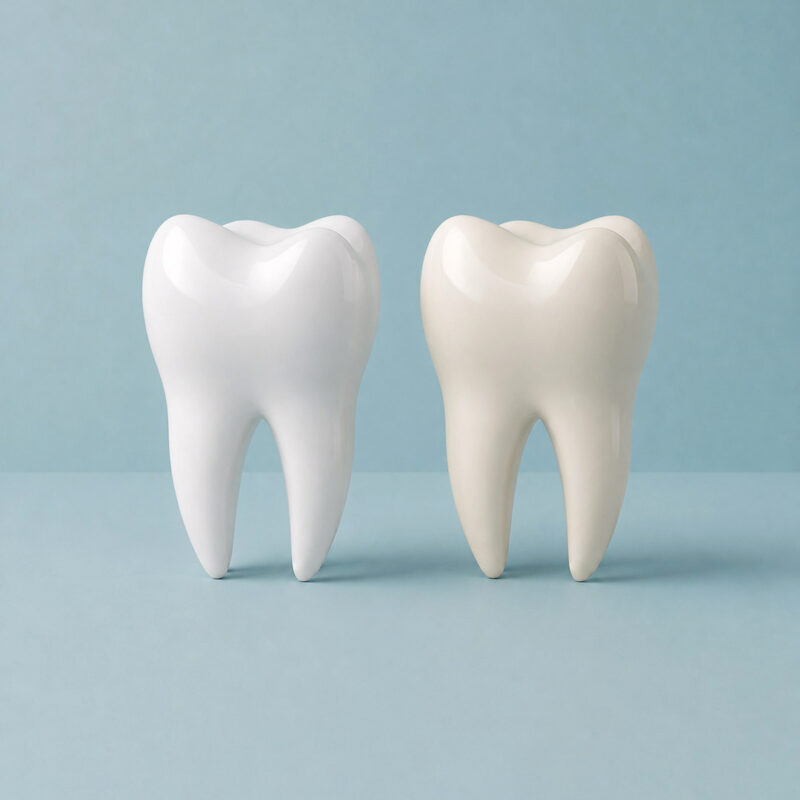
Whitening lifts discolouration and brightens your natural tooth colour, done under professional supervision. A peroxide-based gel breaks down the stain molecules built up in and on the enamel, from years of coffee, tea, red wine, tobacco or simply age, restoring a lighter shade without touching the shape or structure of the tooth. It’s not a permanent change, colour will drift back over time depending on your diet and habits, but with reasonable care the result holds for a good while and is easy to top up rather than redo from scratch.
Only natural tooth enamel responds to whitening, though, so any existing fillings, crowns or veneers will keep their current colour and stand out more once the rest of your teeth lighten, worth knowing before you commit to a shade, since it can mean restorative work needs replacing afterward to match.
Who it’s for
Teeth dulled or stained by coffee, tea, red wine, smoking or age usually respond well. Some causes, certain medications, or a root canal treated tooth, need a different approach, which is why treatment starts with an assessment, not a fixed protocol.
Your options
In-chair whitening
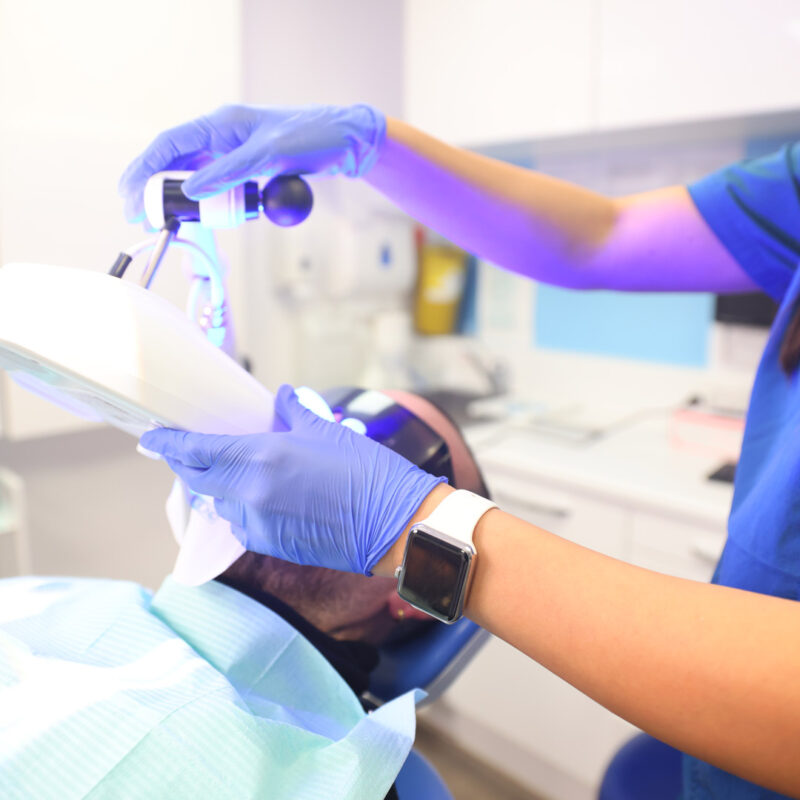
One appointment, gel activated under a dental light in short sessions. Fastest route to a visibly lighter result.
Home trays
Custom-fitted trays made from an impression of your teeth, used at home with professional-strength gel. Slower, gradual, easy to top up later.
Combined
In-chair first for a fast result, home trays after to extend and maintain it.
Internal whitening
For a single tooth discoloured after root canal treatment, whitened from the inside. Visible within days.
Why not a shop-bought kit
One-size trays fit poorly and whiten unevenly. Concentrations are capped lower than what a dentist can use, so results are weaker, and there’s no assessment of why the tooth is discoloured in the first place, which matters if the cause isn’t simple staining.
Who can have whitening
Whitening needs a healthy mouth to work safely and evenly. Any active decay or gum disease has to be treated first, whitening gel on an untreated cavity can cause sharp sensitivity or pain, and inflamed gums make the whole process less predictable and less comfortable. That’s why every whitening treatment starts with a check-up, not just a shade consultation, if anything needs addressing first, we’ll treat that, then whiten once your mouth is in good shape.
Aftercare
Avoid coffee, tea, red wine and smoking for 48 hours after treatment. Mild sensitivity for a day or two is normal and settles on its own, sensitivity toothpaste helps if needed. Clean and dry home trays after each use.
Book a Consultation
Book an appointment and we’ll assess your teeth and recommend the right option. Not sure yet, or have a question? Leave your details and we’ll call you to arrange a time.