
Composite Bonding
Composite bonding is a tooth-coloured resin applied directly onto the tooth surface, shaped by hand, then hardened with a curing light, all in one visit. No lab, no impression, no removable model. The dentist builds it up layer by layer and polishes it to match the surrounding teeth before you leave.
It’s the most conservative restorative option available: no drilling into healthy tooth structure, no temporaries, no waiting on a lab turnaround. What you see at the end of the appointment is the final result, not a placeholder until something more permanent comes in. Because it’s applied and shaped in real time, the dentist can adjust the contour and shade against your natural teeth as they go, rather than working from an impression taken days earlier. If something needs tweaking later, a chip, a shade shift, a shape adjustment, it can be added to or refined without starting over.
What it actually fixes
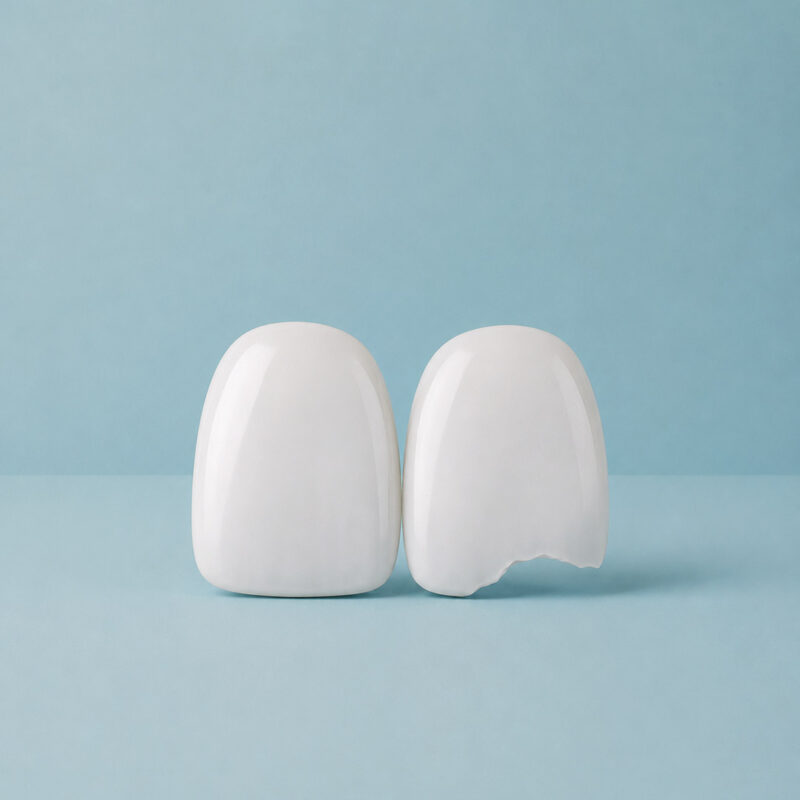
- A chipped edge or corner
- A small gap between two teeth (diastema)
- Uneven or jagged edges
- A tooth that’s slightly shorter or misshapen next to its neighbours
- Minor wear from grinding
- A tooth that didn’t fully respond to whitening
It’s a shape and surface fix, not a colour-of-the-whole-tooth fix and not a structural rebuild. If a tooth is broken down significantly or under heavy bite load, bonding isn’t strong enough, that’s crown territory.
How it’s different from veneers
Veneers replace the full front surface of the tooth, need an impression, are made in a lab, need some enamel removed to fit, and are a longer-term, less reversible commitment. Bonding sits directly on the existing tooth, needs little to no enamel removal, and can be adjusted, added to, or replaced without much fuss. Veneers last longer and hold colour better. Bonding is faster, cheaper, and easier to reverse or redo.
Aftercare
Bonding isn’t as stain-resistant as natural enamel or porcelain, so cut back on coffee, tea, red wine and smoking for the first 48 hours while the surface settles, and keep it in mind long-term too. Don’t use the bonded tooth to bite nails, open packaging or chew ice, it chips more easily than a natural tooth edge. It’ll get polished at your regular hygiene visits, same as your other teeth. If it does chip, it’s repairable, that’s one of the practical advantages over a crown or veneer.
Book a Consultation
Book an appointment and we’ll assess whether bonding is the right fix for what you want to change.