
Dental Implants
A dental implant replaces a missing tooth from the root up. A titanium post, biocompatible with the body, is placed in the jawbone. Once it’s fused with the bone, usually 3 to 6 months, a crown or bridge is fitted on top.
Missing teeth are best replaced early. The longer a gap is left, the more likely additional treatment, like bone grafting or a sinus lift, becomes necessary.
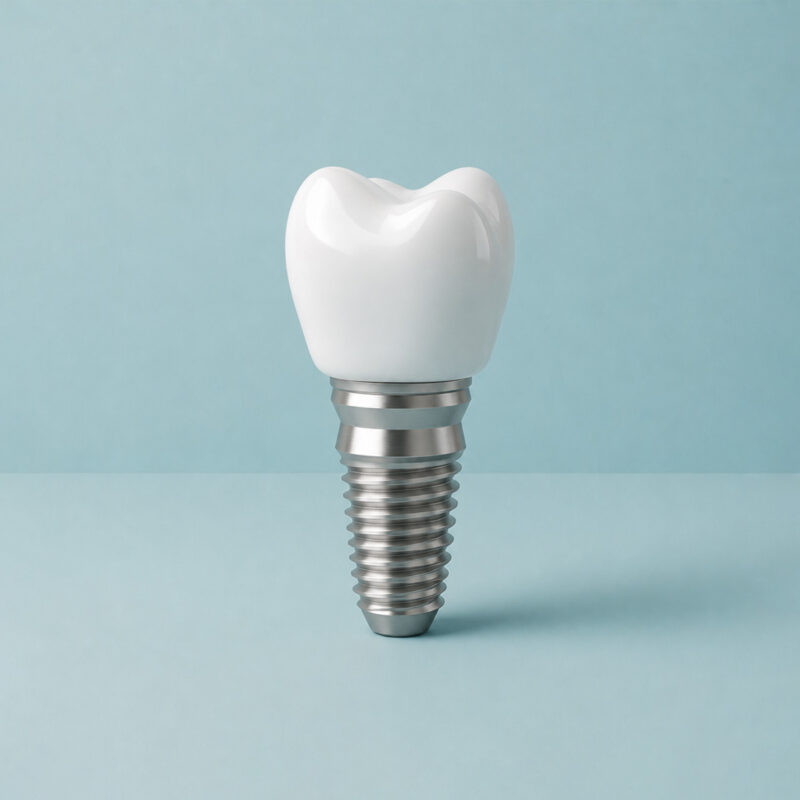
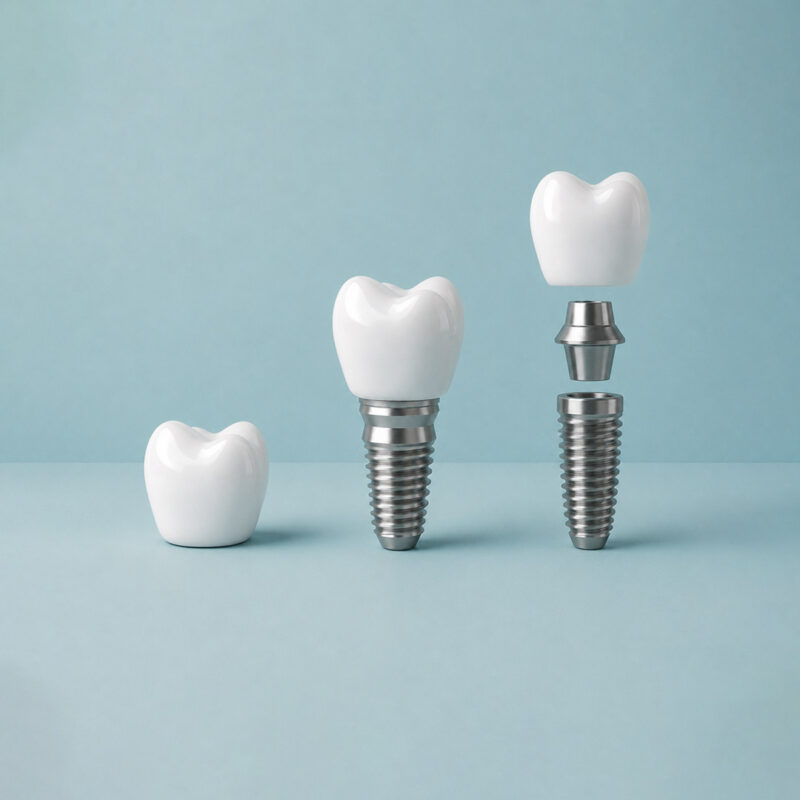
The implant process
- Consultation and treatment plan
- Implant placement
- Healing period, bone integration
- Abutment placement (the connector between implant and crown)
- Crown or bridge fitted
Implants vs dentures
Dentures cost less upfront but add up over time: realignment, adhesive, and replacement every 3 to 5 years. They also sit on the gum rather than fusing with the bone, which means they don’t stop the bone loss that follows tooth loss, and can affect fit, comfort and chewing over the years.
Implants integrate with the jawbone directly. This stimulates the bone the way a natural tooth root does, which helps prevent the bone loss that dentures don’t address.
Advantages
- Restores biting and chewing function
- Doesn’t require shaping down adjacent teeth, unlike a bridge
- Helps prevent the bone loss associated with missing teeth
- Can also be used to secure and stabilise dentures
Aftercare
The first 24 to 48 hours matter most. Bite on gauze to control bleeding, avoid rinsing or spitting forcefully, and skip hot food and drinks until the numbness wears off. Stick to soft foods for a few days and chew on the opposite side where possible.
Avoid smoking and alcohol while healing, both slow down bone integration. Keep the area clean with gentle brushing, avoiding direct contact with the site at first, and use any mouthwash or antibiotics as prescribed.
Some swelling and mild discomfort is normal for a few days, standard painkillers usually manage it. Once healed, the implant needs the same long-term care as a natural tooth: proper brushing, flossing, and regular check-ups, since gum disease can affect implants too.
Book a Consultation
Missing a tooth? Book a consultation and we’ll assess whether an implant is right for you.